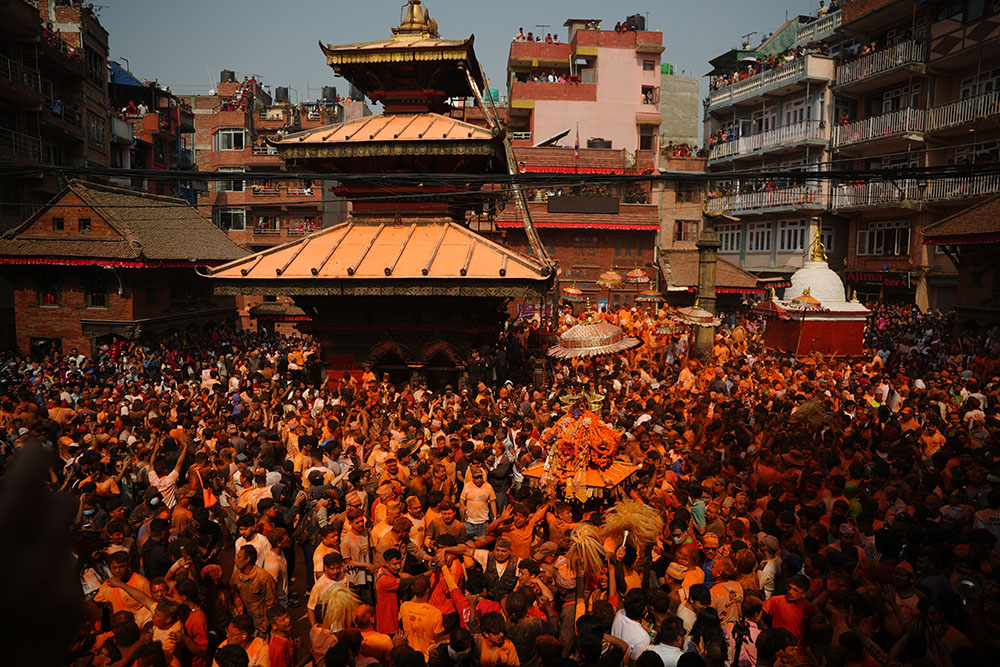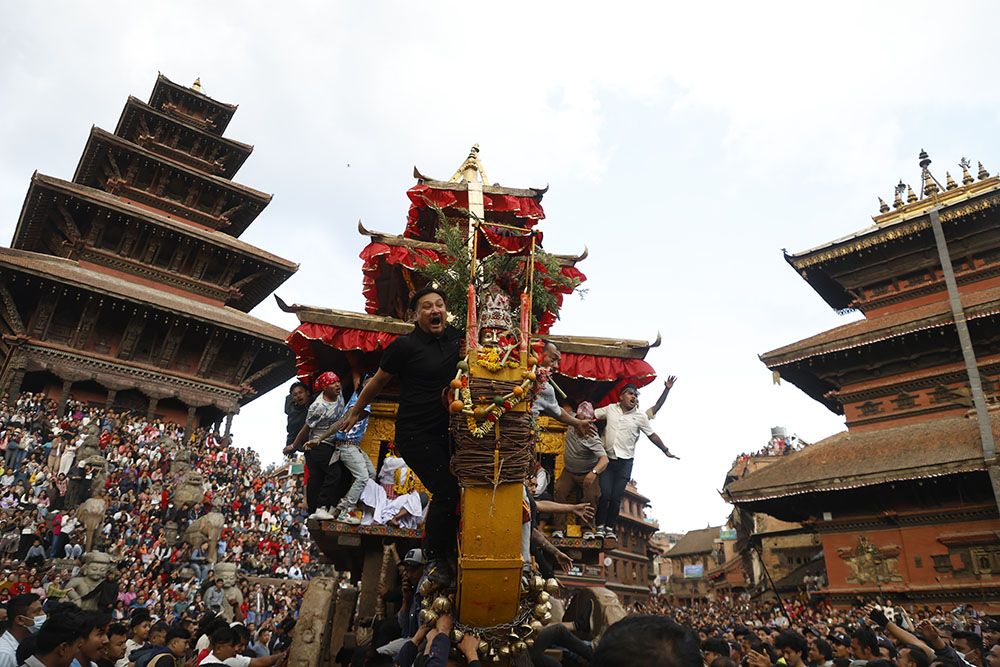
As the final light of Chaitra softens over the Kathmandu Valley, the ancient city of Bhaktapur does more than turn a page in time—it awakens an epic. Through Bisket Jatra, alongside the vivid Sindoor Jatra of Thimi and the haunting Tongue Piercing ritual of Bode, the valley transforms into a living stage where myth, devotion, power, and livelihood converge.
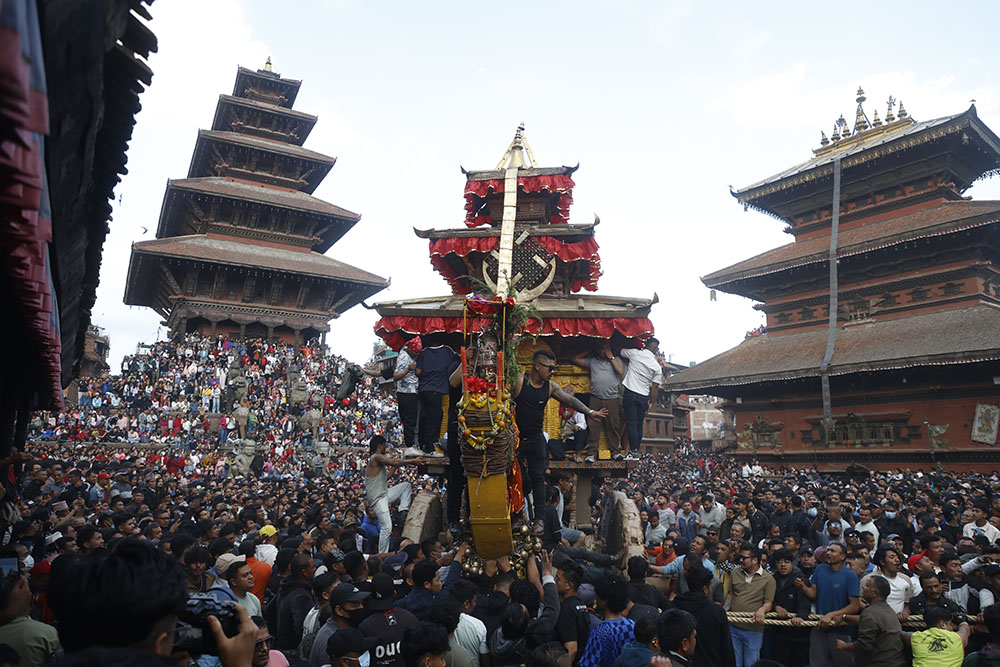
Myth and Memory: The Slaying of the Serpents
At the heart of Bisket Jatra lies a legend both eerie and profound. The very name “Bisket” is believed to arise from the Newari words Bi (serpent) and Syat (slain)—a quiet echo of an ancient terror.
It is said that a princess, radiant yet cursed, brought death to every man she married. On each wedding night, two serpents would emerge from her nostrils, claiming the life of her groom. At last, a prince—guided by divine wisdom—kept vigil. Armed with a sacred blade, he struck down the serpents as they revealed themselves in the darkness.
In their final breath, the serpents asked not for vengeance, but remembrance. And so, each year, the towering Lingo is raised—its streaming banners symbolizing the fallen serpents—declaring to the world that chaos has once again been subdued.
Thimi and Bode: Rituals of Fire and Flesh
Beyond Bhaktapur, the festival’s spirit pulses through neighboring towns with equal intensity.
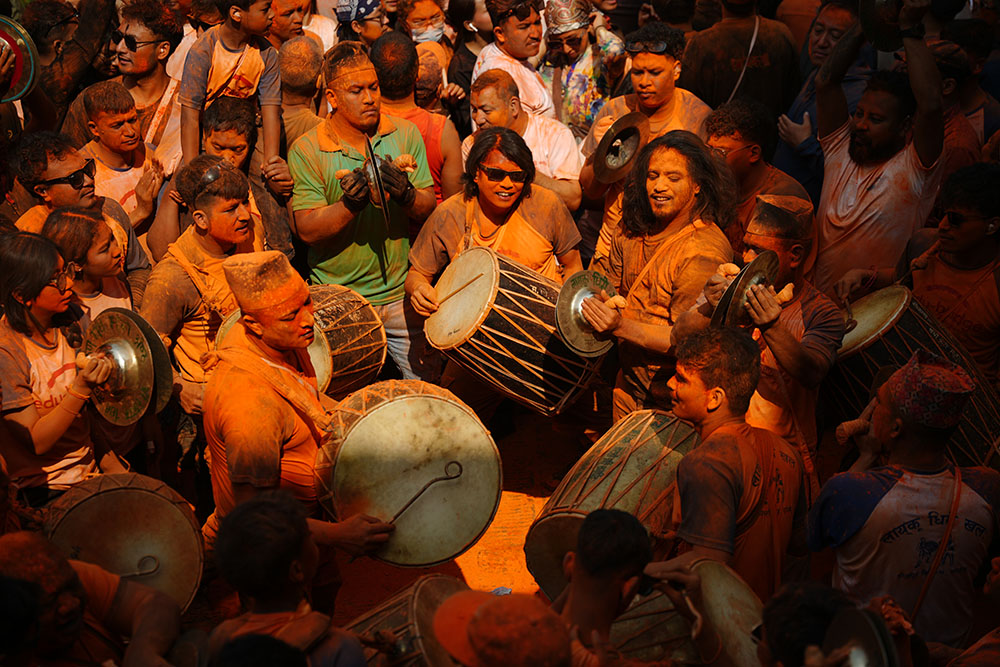
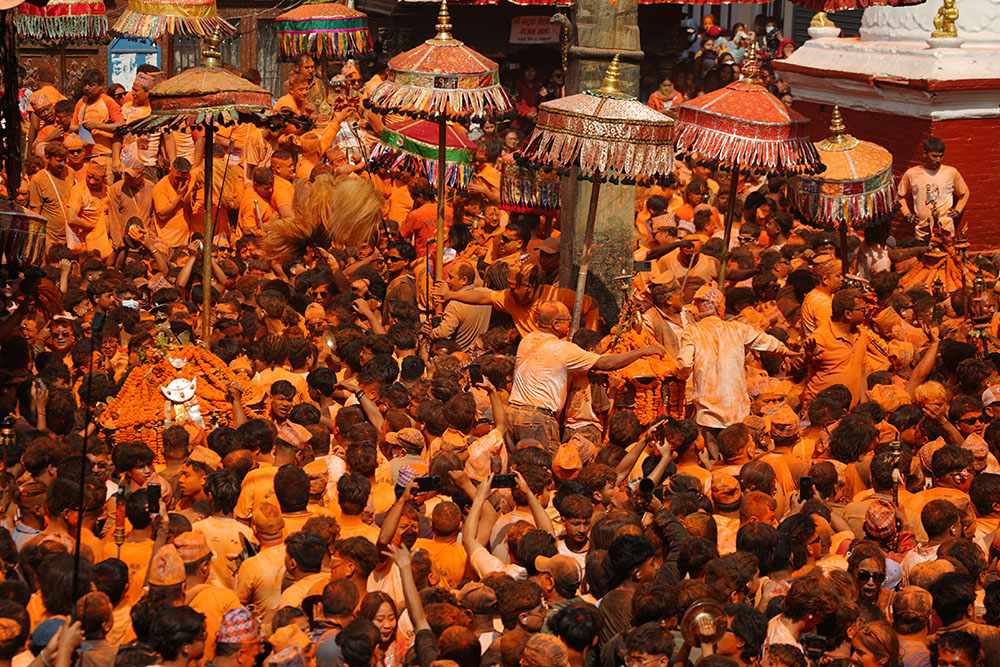
In Thimi, Sindoor Jatra unfolds in a blaze of vermillion. Thirty-two chariots surge and collide amid clouds of orange powder, turning the streets into a canvas of devotion and identity—a celebration both chaotic and deeply rooted.
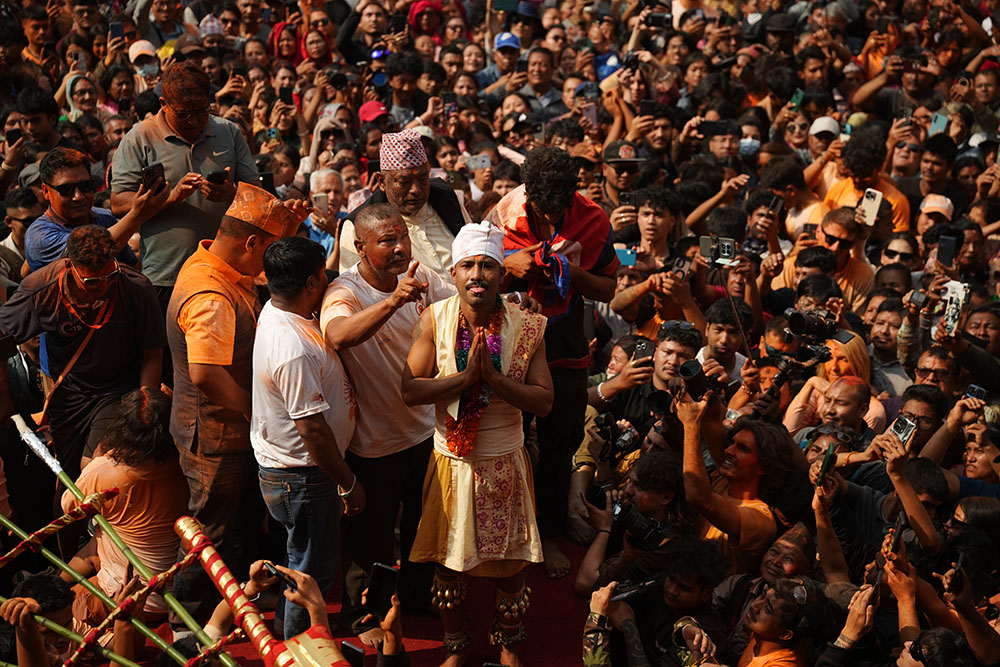
Yet it is in Bode that the festival reaches its most visceral expression. The Jibro Chedne Jatra, or Tongue Piercing ritual, stands as a stark testament to endurance and faith.
Its origins trace back to the time of King Shivadev, when the Tantric adept Shekhar Acharya is said to have transformed into a thousand tigers to defend the city from invasion. His later tragic fate gave rise to a ritual that endures to this day—where a chosen devotee pierces his tongue with an iron spike, embodying sacrifice, discipline, and the triumph of spirit over suffering.
Power in Ritual: The Politics of Tradition
Though sacred in form, these festivals have long carried the weight of politics.
During the Malla era, such grand spectacles were instruments of sovereignty—expressions of power designed to impress rival kingdoms and unite subjects under a shared cultural identity. Some historians believe Bisket Jatra may date back to the Licchavi period, when it was celebrated as a symbolic remembrance of the Licchavis’ triumph over the Kirati rulers circa 300 AD.
Today, that legacy continues in quieter, yet no less significant ways. The stewardship of the festival by Guthis—traditional community trusts—represents a powerful assertion of local autonomy. Operating beyond the rhythms of central governance, they embody a form of collective resilience rooted in heritage.
Even the dramatic chariot clashes between the “Upper” and “Lower” city serve a deeper purpose—transforming rivalry into ritual, and conflict into continuity.
The Pulse Beneath the Festival: An Economy of Tradition
Beneath the spectacle lies a vibrant economic current—an ecosystem sustained by centuries of practice.
Artisans find renewed purpose as potters, woodworkers, and metal craftsmen bring the festival to life through their skill. Hospitality thrives, as Bhaktapur and Thimi welcome an influx of visitors, filling every courtyard and guesthouse. Markets swell, streets awaken, and commerce flows with quiet urgency.
At its foundation lies the Guthi system—an enduring model of communal resource management. Funded by the yields of ancestral lands, it stands as a rare bridge between tradition and sustainability, proving that ancient systems can still sustain modern realities.
A Heritage That Endures
As the sacred pole of the procession, known as the Lingo, is finally brought down, marking the arrival of a new year, the echoes of the festival linger—both solemn and triumphant.
Bisket Jatra, along with the rituals of Thimi and Bode, is far more than folklore. It is a living inheritance—a convergence of myth, memory, governance, and livelihood. In an age of rapid change, it remains a steadfast reminder that identity is not merely preserved, but performed, year after year.
And so, as the valley steps forward into another cycle of time, its people stand unwavering—guardians of a tradition that continues to pierce through modernity with enduring force.